Welcome to the Art & Science repository for the academic year 2065/27. Here you will find a growing collection of teaching-related materials such as lecture presentations, literature, and media. In a separate section, you can also access the repository dedicated to this year’s topic: Models (of the World).
REPOSITORY of slides and medias used in Martin’s lectures
Slides
Usefull on line resources (DOC)
Literature
⇒ For all available e-books click here
Movies
⇒ For all available movies click here
Activities Images
26/27 YEARLY TOPIC: Models (of the world)
Models are everywhere. They appear as mathematical equations and physical prototypes, maps and diagrams, architectural maquettes and scientific simulations. A model can be a person posing in a drawing class, an organism standing in for a species, an example to follow, or an artificial intelligence trained on vast amounts of data. Despite these very different meanings, models share a peculiar relationship with something beyond themselves: they stand for, simplify, embody, test, predict, or propose something else.
Models are fundamental tools of both scientific inquiry and artistic practice. We build them because the world is too complex, too large, too small, too distant – or sometimes simply not yet there – to be approached directly. Models isolate relationships, test assumptions, communicate ideas and explore possibilities. Their power lies in selection and reduction: in deciding what matters and what can, at least temporarily, be left aside.
Modelling is therefore an active and consequential process. Something becomes a model because someone decides what should be represented, which relationships are significant and which can be ignored. Who makes a model, for whom and for what purpose? What enters it, what disappears, and what might emerge unexpectedly in the process?
These questions also complicate the relationship between model and world. An architectural model may refer to a building that does not yet exist. A climate model describes processes that can never be encountered as a single object. A mathematical model may have no obvious material original at all, while fictional and speculative models can construct possible worlds of their own. Modelling can move from an existing phenomenon towards abstraction, but also from an idea, hypothesis or fiction towards something that might eventually become real.
Scientific and artistic practices both work within this productive distance. Models can make inaccessible phenomena available for observation and experiment; sketches, maquettes, scores, diagrams, simulations and fictional scenarios allow relationships to be rearranged and possibilities tested. In doing so, models can reveal structures that were not apparent before. They do not simply show what is already known. They can make something visible, thinkable or knowable in the first place.
And models can act back upon the world. Maps organise territories, economic and climate models inform decisions, architectural models anticipate environments that may subsequently be built. Digital technologies intensify this feedback. A digital twin can become part of the system it was designed to describe. Machine-learning models classify, generate, recommend, decide and communicate. What does model mean when a model no longer only represents something, but begins to act within the world – and even talks back to us?
The gaps, omissions and failures of models are equally revealing. Models can be inaccurate, biased, outdated, deceptive or simply confronted with something they were never designed to accommodate. Yet the discrepancy between a model and the world can itself produce knowledge. It may expose hidden assumptions, reveal what has been excluded, or open possibilities that a supposedly accurate representation would not.
Models have always participated in changing ways of understanding the world. Globes, anatomical figures, perspective drawings, maps and mathematical abstractions do more than preserve particular worldviews. By selecting and arranging relationships, they help establish what can be seen as evidence, what can be known and what can be imagined as real. Sometimes models describe worlds; sometimes they anticipate them; and sometimes the world begins to resemble its models.
This year's topic invites students to approach modelling as an experimental practice across art and science: to investigate existing models and their assumptions, to test their limits, take them apart, misuse or reinvent them, and to imagine models for things that have so far resisted representation.
What other models might we need to understand a world that is changing around us? What happens if we model relationships, uncertainties, transformations or possible futures? Can we invent models that do more than explain what already exists – models that allow us to think differently, perceive differently, and imagine worlds that have not yet taken shape?
The challenge is not only to understand the models we already have, but to discover what else a model could be – and what other worlds it might enable us to think.
LITERATURE related to Models (of the World)
Roland Barthes, “The Structuralist Activity” (1963)
Barthes describes structuralism as an activity of taking an object apart and reconstructing it in order to reveal relations and rules that were not previously apparent. The reconstruction is therefore not merely a copy: it produces a new intelligibility of its object. This short text provides an intriguing bridge between scientific analysis, artistic practice and modelling.
Nelson Goodman, Ways of Worldmaking (1978)
Goodman challenges the assumption that there is one world that our representations simply describe more or less accurately. Through art, science, language and other symbolic systems, we construct different “versions” of worlds by selecting, ordering, combining and emphasising aspects of experience. His concept of worldmaking offers a particularly productive connection to the question of what “of the World” might mean in our yearly topic.
Jean Baudrillard, Simulacra and Simulation (1994 [1981]), especially “The Precession of Simulacra”
Baudrillard radically questions the traditional relationship between model, representation and original. In simulation, models and signs can cease to refer to a stable reality and instead participate in producing what is experienced as real. Whether or not one follows Baudrillard’s conclusions, the text provides a provocative way of asking what happens when the distinction between model and world begins to collapse.
Mary S. Morgan & Margaret Morrison (eds.), Models as Mediators: Perspectives on Natural and Social Science (1999)
This influential collection examines models as more than representations or applications of theory. Models operate as mediators between theory and the world: they can be constructed, manipulated and explored in order to generate knowledge. The book offers a useful foundation for thinking about modelling as an active epistemic practice.
Soraya de Chadarevian & Nick Hopwood (eds.), Models: The Third Dimension of Science (2004)
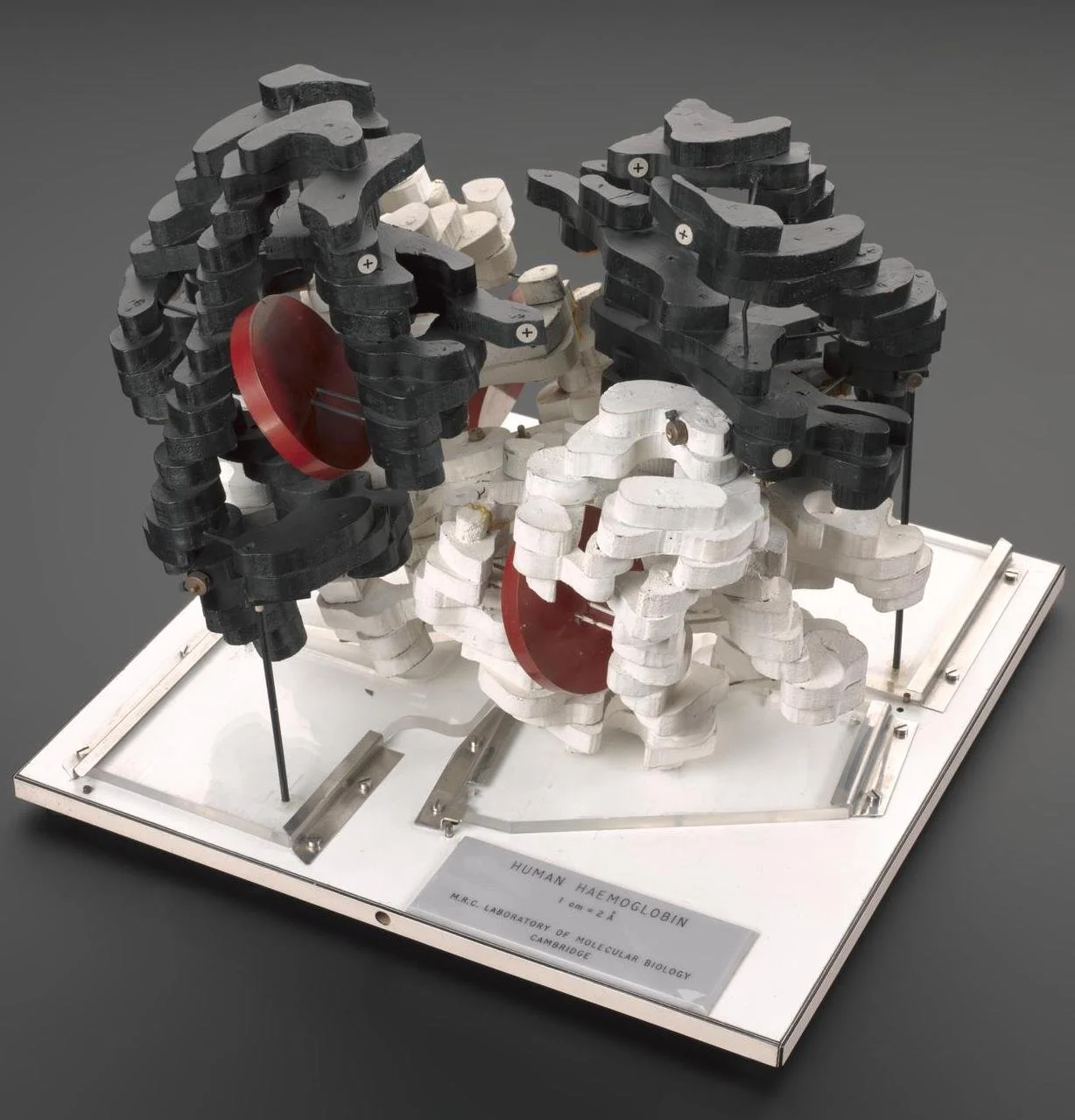
This collection explores the history and use of three-dimensional models in scientific practice, from anatomical and biological models to representations of molecules and other phenomena. It foregrounds the materiality of modelling and shows how models can function as instruments of research, communication and teaching. Particularly relevant is the way physical models move between scientific, educational and visual cultures.
Lorraine Daston & Peter Galison, Objectivity (2007)
Daston and Galison trace the changing ideals that have shaped scientific images and practices of observation since the eighteenth century. Rather than treating objectivity as a timeless scientific value, they show how different ways of producing and interpreting images have constructed different forms of scientific knowledge. The book raises a central question for our topic: how do representations help determine what can be seen and accepted as evidence?
Eric Winsberg, Science in the Age of Computer Simulation (2010)
Winsberg examines computer simulation as a distinctive way of producing scientific knowledge. He investigates how simulations combine theories, mathematical models, approximations, computational techniques and empirical knowledge, and asks how we can establish confidence in their results. The book is particularly useful for thinking about climate models and other situations in which experimentation on the world itself is difficult or impossible.
James Bridle, New Dark Age: Technology and the End of the Future (2018)
Bridle examines the paradox that unprecedented access to computation, data and information does not necessarily make the world more intelligible. Scientific models, algorithms and computational infrastructures can illuminate complex phenomena while also producing new forms of opacity and uncertainty. Written from the perspective of an artist and writer, the book provides an accessible bridge between technology, politics, culture and artistic practice.
Kate Crawford, Atlas of AI: Power, Politics, and the Planetary Costs of Artificial Intelligence (2021)
Crawford approaches artificial intelligence not as an immaterial or autonomous technology but as a material and political system dependent on data, human labour, natural resources and systems of classification. Her analysis makes visible what disappears behind apparently abstract computational models. The book is particularly relevant to questions of selection, categorisation, bias and the material conditions underlying AI models.
Knuuttila, Grüne-Yanoff, Koskinen, Wirling (eds.), Modeling the Possible: Perspectives from Philosophy of Science (2025)
This collection examines how scientific models are used not only to describe what is or has been the case, but to investigate what could be possible. Drawing on examples from climate science, economics, biology and other fields, the contributions explore how models construct and test spaces of possibility, hypothetical scenarios and alternative worlds. Particularly relevant to Models (of the World) is the idea of modelling as a practice for exploring realities that do not yet exist – or may never exist – while asking how we can justify the possibilities that models allow us to imagine.
More to come…
⇒ For all available e-books click here
MOVIES related to Models (of the World)
Rainer Werner Fassbinder, World on a Wire (Welt am Draht) (1973)
At a research institute, scientists operate a computer simulation populated by thousands of artificial inhabitants who are unaware that their world is simulated. As the boundaries between different levels of reality begin to collapse, the film turns into an investigation of perception, control and the possibility of distinguishing model from original. It offers an early and remarkably complex exploration of what happens when a model becomes an inhabitable world.
Andrei Tarkovsky, Solaris (1972)
A psychologist travels to a space station orbiting Solaris, a planet whose mysterious ocean materialises figures drawn from the memories of the scientists studying it. These manifestations are at once copies, reconstructions and autonomous beings, destabilising any clear distinction between memory, model and original. The film asks how we can understand something that produces representations without knowing either their mechanism or their purpose.
Andrei Tarkovsky, Stalker (1979)
A guide known as the Stalker leads two men into the Zone, an anomalous territory in which ordinary assumptions about space, causality and human intention no longer seem reliable. Attempts to understand its rules repeatedly fail as the environment appears to resist prediction. The Zone can be read as a system that exceeds every model constructed to explain it.
Jean-Luc Godard, Alphaville (1965)
In the futuristic city of Alphaville, everyday life is governed by the computer Alpha 60 according to principles of logic, efficiency and calculation. Emotion, poetry and ambiguity are progressively eliminated from a society organised according to its computational system. The film raises the question of what happens when a rational model no longer describes the world but begins to organise it.
Jacques Tati, Playtime (1967)
Tati transforms modern Paris into a seemingly endless environment of glass, grids, identical interiors, traffic systems and standardised behaviour. Architecture, objects and social conventions appear to follow the same rational model, while accidents, misunderstandings and spontaneous encounters continually disrupt its order. Playtime can therefore be seen as a comedy about the discrepancy between designed systems and lived reality.
Charlie Kaufman, Synecdoche, New York (2008)
A theatre director attempts to create an increasingly comprehensive reconstruction of his life inside an enormous warehouse, eventually building a replica of New York populated by actors playing himself and the people around him. As the production expands, representation and life become impossible to separate. The film pushes modelling towards the paradox of the 1:1 map: what happens when a model attempts to become as complex as the world it represents?
Lana & Lilly Wachowski, The Matrix (1999)
Human beings unknowingly inhabit a simulated reality generated by machines while their physical bodies exist elsewhere. Beyond its familiar question of whether reality might be a simulation, the film explores what happens when a model becomes the environment through which reality itself is perceived and understood. The simulation is no longer an image of a world but a world with material consequences.
Harun Farocki
Harun Farocki, Eye/Machine I–III (Auge/Maschine) (2001–03)
Farocki examines images produced within military, industrial and surveillance technologies, many of which are designed not primarily to be seen by humans but to enable machines to recognise, track and act. Such “operational images” complicate the traditional idea of representation: images become components within technical processes rather than depictions made for contemplation. The trilogy anticipates contemporary questions surrounding machine vision, automated classification and AI.
Harun Farocki, War at a Distance (Erkennen und Verfolgen) (2003)
Beginning with images from the Gulf War, Farocki investigates the convergence of military imaging, industrial automation and computerised systems of perception and control. Seeing, modelling and acting become increasingly integrated within the same technological processes. The film asks what becomes of representation when images themselves participate in operations performed upon the world.
Harun Farocki, Serious Games I–IV (2009–10)
This four-part installation examines computer simulations used by the US military for training soldiers before deployment and for treating post-traumatic stress after their return. Strikingly, related virtual environments can function both as models of events that have not yet happened and as reconstructions of events that already have. Simulation thus becomes a space in which anticipation, experience and memory interact.
Harun Farocki, How to Live in the German Federal Republic (Leben – BRD) (1990)
Farocki observes training situations in which people rehearse everyday social realities: childbirth, job interviews, police encounters, first aid, sales techniques and other forms of behaviour. Society appears to construct small-scale simulations of itself in order to teach its members how to act within it. Modelling here becomes performative: reality is rehearsed through simplified versions of reality.
Chris Marker
Chris Marker, La Jetée (1962)
After a devastating war, a man is selected for experiments in time travel because of his unusually powerful attachment to an image from his childhood. Memory becomes the means through which past and future are reconstructed, until the remembered image and the event it represents become inseparable. The film offers a particularly concise exploration of memory as a model through which reality is continually reconstructed.
Chris Marker, Sans Soleil (1983)
Moving between travelogue, essay, fiction and documentary, Sans Soleil reflects on memory and on the ways images construct our relationship to places, histories and experiences. Images are repeatedly remembered, rearranged and electronically transformed, making their instability visible. Rather than functioning as neutral records, images become instruments through which different versions of the world are produced.
Chris Marker, Level Five (1997)
A woman attempts to complete a computer programme reconstructing the Battle of Okinawa while simultaneously confronting the disappearance of her lover. Historical documents, testimony, computer networks, databases and simulation become intertwined as she tries to construct a model of an event whose reality can never be completely recovered. The film explores the limits of modelling history and the unstable relationship between data, memory and absence.
Scale, systems and classification
Charles & Ray Eames, Powers of Ten (1977)
Beginning with a couple having a picnic in Chicago, the film repeatedly changes scale by powers of ten, travelling outward towards the limits of the observable universe and inward towards the subatomic structure of matter. The continuous movement creates an apparently coherent model connecting radically different spatial scales. In doing so, the film demonstrates how scale itself is a conceptual instrument through which the world becomes intelligible.
Godfrey Reggio, Koyaanisqatsi (1982)
Without conventional dialogue or narrative, Reggio assembles images of landscapes, cities, machines, traffic, production and human activity into rhythmic visual patterns. Through montage and changes of speed, individual actions begin to appear as components of larger technological and social systems. The film can be approached as an audiovisual model that attempts to reveal patterns that are difficult to perceive from within everyday life.
Peter Greenaway, The Draughtsman’s Contract (1982)
An artist is commissioned to produce a series of precise drawings of an English country estate, believing that careful observation will allow him to record the property objectively. Yet unexplained objects and changes begin appearing within his drawings, suggesting events whose significance he fails to understand. The film becomes a playful investigation of the difference between accurately recording what is visible and actually understanding what it means.
Alain Resnais, Last Year at Marienbad (L’Année dernière à Marienbad) (1961)
In an elaborate hotel, a man tries to convince a woman that they met there the previous year, while she denies or cannot remember the encounter. Architecture, repetition, memory and contradictory narratives continually reorganise the possible past. Rather than establishing a definitive version of events, the film constructs competing models of what might have happened.
Peter Greenaway, The Falls (1980)
Presented as an encyclopaedic documentary, The Falls catalogues ninety-two people whose surnames begin with “Fall” and who have supposedly been affected by a mysterious event known as the Violent Unknown Event. Through biographies, classifications, recurring symptoms and elaborate cross-references, an increasingly complex fictional world emerges from the very system designed to document it. Classification here does not simply organise reality; it actively produces the reality it claims to describe.
More to come…
⇒ For all available movies click here
ARTWORKS & ARTISTIC PROJECTS related to Memory